Everthing You Need to Know About Sweda Food Dehydrator

Tuesday, February 24, 2009

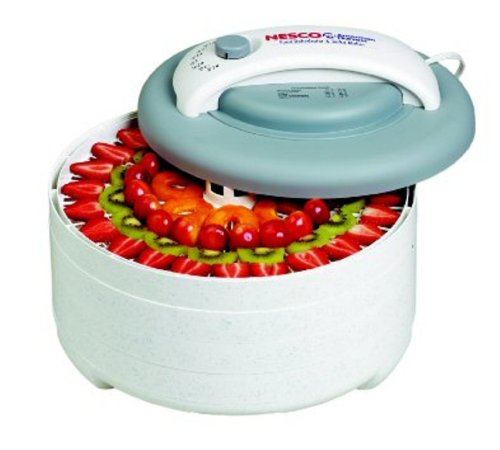
Nesco American Harvest FD-61 Snackmaster Encore Dehydrator and Jerky Maker

This convenient dehydrator makes great tasting, healthy snacks & jerky! Introducing the Snackmaster?? Encore???. It's Grey top and marbled design features 500 watts of drying power, and generates maximum speed and quality for dehydrating fruits, vegetables, beef jerky, and venison jerky. Helps dry food in hours, not days like ordinary food dehydrators. The top mounted fan eliminates the worry of liquids dripping into the the heating chamber!You can make delicious beef jerky, turkey jerky, fish jerky, trail mix, homemade yogurt, apple snacks, banana chips, dried soup mixes, dried tomatoes, watermelon, cantaloupe, honeydew, mangoes, papaya and other dried fruits at a fraction of the cost. Make dried herbs and spices; also make potpourri and dried flowers for any occasion.


Vegetable oils scented with herbs and spices were extensively used in antiquity, but we have no knowledge of their application in the kitchen. We do know, however, that owing to their inherent qualities, vegetable oils were used for body care. Selected herbs were added to vegetable oils to lend them valuable curative, styptic and antioxidant qualities.

During the reign of Byzantine emperor Constantine "the purpleborn", legist Cassianos Vassos is credited with a number of recipes for scented olive oil. Some of these recipes provide instructions for improving medium and low quality olive oils with the addition of aromatic herbs. For example, rancid olive oil improves with the addition of dill and foul-smelling olive oil with the addition of coriander or raisins. A popular practice in the villages of the province of Pediada, Crete, was to add 2-3 oregano sprigs in large earthenware jars used as olive oil containers.

There has been a lot of research in the plant kingdom for substances with antioxidant qualities, particularly in herbs and aromatic plants, the main sources of antioxidants. Independent investigation results concur on the significant antioxidant qualities of rosemary and oregano.

In 1952 Chipault noted that consumption of salted meat should be combined with infusions of rosemary, sage, and thyme. In addition, he claims that oregano combined with mayonnaise acquires excellent antioxidant properties. Modern research is under way by the Aristotelian University of Athens with regard to the stability of olive oils mixed with rosemary, oregano, garlic and thyme.

The proper harvesting of wild herbs is determined by the particular location of the plants as well as their subsequent culinary application. In particular,

Leaves, shoots and blossomed tops should be harvested during the afternoon hours when most of the plants' active substances accumulate in those sections. Similarly, roots and bulbs should be collected in autumn or spring, and fruits, flowers early in the morning all year round.

Never harvest plants / herbs, if you are not sure whether they are edible.

Herbs and wild greens growing on road sides or curbs are not suitable for consumption.

Harvesting during the months of March and April requires caution since during that period most farmers spray their land with hazardous pesticides.

Harvest only the green and healthier looking herbs / plants.

Do not uproot herbs / plants, but trim the tender parts to give plants / herbs the opportunity to grow again.

Harvest only the quantities you consider enough to last you for 5-6 days. Herbs and plants loose their precious qualities after this period.

Never leave plants / herbs in nylon / plastic bags, closed spaces, under direct sun light or in the trunk of your vehicle.

Tips for purchasing herbs and wild plants

If you live in the country, but do not have the knowledge required to identify specific herbs and wild plants, or the time to harvest them yourselves, look for them in your local market or greengrocer.

It is advisable to find out the origin of the herbs and plants you intend to buy.

Never purchase herbs / plants with obvious damage on leaves or fruits.

Tips for storing herbs and wild plants

Wild plants and herbs are best for consumption the same day of purchase. The same is true for all vegetables.

Never wash or rinse wild plants if you intend to store them in a freezer or refrigerator for a few days. Refrigerated plants turn yellow and give off a foul smell in a week or so. If you must refrigerate wild plants, store them at the lower compartment of the refrigerator.

Always remove the yellow leaves, soil or any other visible foreign matter before refrigerating herbs and wild plants. Do not wash.

Wild plants with thick leaves and stems last longer in the freezer/ refrigerator. However, chicory and asparagus wither and turn yellow quite easily.

Tips for washing herbs and wild plants

Herbs and wild plants should not be soaked or they will loose many of their much desired substances (particularly sugars, vitamins and minerals)

Always rinse them under running water, particularly the leaves and root section.

Never dispose of roots since they concentrate valuable substances (water, sugar, etc.) Roots are best cleaned with a brush. Do not scrape them with knives or other sharp instruments.

Wild plants harvested from areas frequented by sheep and dogs should first be soaked in a vinegar solution for 10 minutes prior to consumption and then rinsed thoroughly.

Herbs and wild plants can be found all over Greece and the Greek Islands along with other Greek Products of the Greek earth.

dehydrator
Monday, February 16, 2009

Nesco American Harvest FD-61 Snackmaster Encore Dehydrator and Jerky Maker

This convenient dehydrator makes great tasting, healthy snacks & jerky! Introducing the Snackmaster?? Encore???. It's Grey top and marbled design features 500 watts of drying power, and generates maximum speed and quality for dehydrating fruits, vegetables, beef jerky, and venison jerky. Helps dry food in hours, not days like ordinary food dehydrators. The top mounted fan eliminates the worry of liquids dripping into the the heating chamber!You can make delicious beef jerky, turkey jerky, fish jerky, trail mix, homemade yogurt, apple snacks, banana chips, dried soup mixes, dried tomatoes, watermelon, cantaloupe, honeydew, mangoes, papaya and other dried fruits at a fraction of the cost. Make dried herbs and spices; also make potpourri and dried flowers for any occasion.


There are certain flavors that just go together, peanut butter and chocolate for example. Another combination of flavors that makes a perfectly happy marriage is honey and barbecue.

These two flavors have created an uproar in the kitchen with chefs churning out by the masses menu items featuring items drenched in honey barbecue sauce: wings, burgers, steaks, chicken breasts, chicken strips, ribs and more. But the honey barbecue sauce can also make for a very good dry treat!

Honey barbecue beef jerky is a popular homemade jerky flavor to make. Sure, there are plenty of honey barbecue sauces available on grocery store shelves from brands like Ken's, Heinz and Kikomon. But, there are also some sweet and tangy recipes for a honey barbecue marinade that is perfect for slapping on beef jerky. Here is one that we found and enjoy:

Ingredients:

3/4 c honey

1/2 c ketchup

1/4 c butter (1/2 stick)

1 tbsp vinegar

2 tsp Dijon style mustard

2 tbsp brown sugar

1 tbsp soy sauce

1 clove garlic, put through a press

chili powder optional, use to taste

1 lb of meat

Directions:

1. Slice meat in thin strips.

2. In a bowl, combine all ingredients of marinade and mix well.

3. Simmer ingredients for about five minutes. Let cool.

4. Place meat 3-4 layers deep in a container, spooning sauce mixture over each layer.

5. Cover tightly and marinate 6-12 hours in the refrigerator, stirring occasionally.

6. Layout on trays, 24 to 36 hours in dehydrator (or follow directions for oven).

When done, the honey barbecue flavor will have been absorbed in every thread of the meat, giving the jerky a lovely blend of that honey barbecue taste our tastebuds have grown to like.

REVIEW: Not sure that you can make it on your own?

The Jerky Outlet offers an amazing honey barbecue turkey jerky. This is a little different than beef jerky, as it is more of a stick snack, which will need to be refrigerated once open. There is more of a honey flavor than barbecue to it. The jerky is also very soft and a little juicy since it is more of a snack stick, and that can be a nice break from the chewy jerky. This is a very good product and comes in a one pound package for $16.99. So it is a little on the pricey side. Try making your own!

If you found this information on honey barbeque beef jerky useful, you'll want to read this article about buy beef jerky online.

dehydrator

Wednesday, February 4, 2009

Nesco American Harvest FD-61 Snackmaster Encore Dehydrator and Jerky Maker

This convenient dehydrator makes great tasting, healthy snacks & jerky! Introducing the Snackmaster?? Encore???. It's Grey top and marbled design features 500 watts of drying power, and generates maximum speed and quality for dehydrating fruits, vegetables, beef jerky, and venison jerky. Helps dry food in hours, not days like ordinary food dehydrators. The top mounted fan eliminates the worry of liquids dripping into the the heating chamber!You can make delicious beef jerky, turkey jerky, fish jerky, trail mix, homemade yogurt, apple snacks, banana chips, dried soup mixes, dried tomatoes, watermelon, cantaloupe, honeydew, mangoes, papaya and other dried fruits at a fraction of the cost. Make dried herbs and spices; also make potpourri and dried flowers for any occasion.


Before foods are cooked, and often after they are cooked, they are subject to a number of different procedures: peeling, slicing, chopping, kneading, folding, mashing, and more. Without a good understanding of these terms, cooking can be a difficult matter. And without some practical experience in these mechanics, cooking would be a chore. Even the simple task of us icing a vegetable is not the first time you try it. Let's take a look at some of these procedures:

Mixing

The process of mixing consists of stirring two or more ingredients in a bowl or saucepan by moving them around with a spoon or a fork. A fork can sometimes produce a lighter mixture than a spoon which is more likely to mash the ingredients.

Blending

Blending consists of mixing thoroughly, without beating, by stirring well until all the ingredients are mixed. It is best to use a wooden spoon of the proper size. This term is also used to describe the action of an electric mixer or blender.

Whisking

Whisking is the process of agitating the ingredients with a light rapid motion. This causes foods such as eggs and cream to incorporate as much air as possible during its mixing. The wire whisk is normally used for this although an electric mixer can be used as well.

Folding

This term describes the process of combining air-filled ingredients, such as beaten egg whites or cream, with a heavier batter. This must be done very carefully so that none of the air is lost from the whipped ingredient. Folding is usually done by using a spatula which makes it easier to cut through the air-filled ingredient without flattening it.

Beating

This is the kind of mixing in which ingredients are completely blended together so that each of them loses its individual identity to become part of the whole. A rotary hand mixer or electric mixer can be used for this type of mixing. An electric blender can also be used.

Mashing

Usually, mashing refers to cooked foods such as potatoes, but we also use it for crushing a garlic clove with the flat side of a knife to release the flavor of the garlic more quickly in cooking.

Grinding

Though grinding is more often used for grinding coffee in modern times, it used to be a term that was used more often for grinding wheat or spices with a mortar and pestle. You can also grind meats with a meat grinder.

Cutting

Cutting is actually a general term used for cutting different types foods. "Cutting" is usually used when a food is cut into chunks before cooking. The different types of cutting are slicing, julienne, sliver, dice, shred, and mince.

All of these terms can describe the mechanics of cooking. Most meals cannot be cooked without using at least one of them. So, knowing these terms and practicing the use of them will help you get your meals to the table quicker.

Visit LearnHomeCooking.com and subscribe to "Learn Home Cooking Tips" to receive our new report, "Freezer Cooking for One" as our gift.

dehydrator

Brie Cheese - The Process For Making Brie Cheese

Brie Cheese is quite unusual and it comes from France where it got its namesake. The French still make Brie Cheese the same way today as they did in the 18th century. Both the commoners and the royalty of that era enjoyed the taste of Brie Cheese. It was always in demand for the ceremonies to offer tribute to the Royals of France.

Outside of France Brie Cheese is make in larger factories where the process is significantly industrialized and sped up. While the try hard to get the very same taste many cheese coniseurs claim you can definitely tell the difference in Brie Cheese that is made in France and that which is made in other places.

To make Brie Cheese, the curds are processed after they are firm. They are injected with a vaccination called a mold infusion. This mold will grow over a couple of weeks and this is where the taste of the Brie Cheese starts to change. The mold grows on the outside of the cheese and preserves the delicious taste inside of it. The white exterior of Brie Cheese has made it quite famous in many parts of the world.

Brie Cheese is commonly sold in one or two kilogram wheels. Some retailers will sell it in smaller wedges as a courteously to customers. There are several varieties of Brie Cheese including plain, herb, and others with combinations of milk products.

It is made from cow's milk but many people are hesitant to try it because of the grayish color it has. Brie Cheese has a very soft and smooth texture to it. It has a rind on it that doesn't taste like anything. It is actually a white mold that you can eat without getting sick but since it has no flavor many people pass it up.

Many people say Brie Cheese tastes very similar to wild mushrooms. For the best taste Brie Cheese should be allowed to sit at room temperature for an hour before serving. It is often served with berries, nuts, salads, and on hamburgers.

If you found this information on Brie Cheese useful, you'll also want to read about Goat Cheese

dehydrator
dehydrator
dehydrator
dehydrator
dehydrator
dehydrator
dehydrator
dehydrator
dehydrator
dehydrator